One Hundred Companies, Three People [Part 2 of 3]
I saw the news this week that Anthropic and OpenAI are starting to embed watermarks in generated text, and my first thought was the obvious business. Help people strip them out. Run the text through other models that don't watermark, keep the meaning, sell that.
So I handed the seed to the agents and went to do something else. What came back was the opposite of my idea: a CMS plugin that lets local newsrooms detect the watermark and auto-insert the AI disclosure, no in-house engineering required. Which makes sense, because the EU AI Act went live on August 1st and those newsrooms now have a compliance problem and no one to fix it.
Mine was the obvious idea. Theirs was the one with a buyer.
That happens often enough now that I want to explain what is actually running underneath it. If you missed it, part 1 is here, and it ends with my agents taking a $190,000 offer to $410,000 in three days.
The bet
This is a bet rather than a proven fact, and I want to be honest about that.
Humans plus agents are still going to out-compete agents alone. I don't think we are building hundred-million-dollar companies this way, at least not yet.
But there are probably thousands of businesses that can generate between $100K and $2 million a year. Those businesses are not high-margin enough to justify a team of ten people working on them. Nobody builds them, because the economics never work.
If you can run them mostly with agents, and plug in a human here and there, mostly on distribution, the economics change completely.
So the idea I've been chasing is this: a hundred profitable companies with three people. Me and two others. A very small, very senior team who know what they're doing and spend their time orchestrating agents rather than doing the work.
We built this out on the Code & State side, reusing most of the orchestration framework from the personal system. As of this week the agents have thought about 957 businesses, built 27 landing pages, are validating six, and have five live and generating revenue.
How an idea becomes a business
It starts with what we call the Idea Factory. These are agents that are good at generating ideas, and all you give them is a seed.
Take the watermark seed from the top of this post. A scout agent goes out and finds the directions in the space, in that case twelve of them. A bull agent and a bear agent argue each one. Researchers pull SEO data, look at TrustMRR, read Hacker News. Ideas come out the other end, and the newsroom plugin was the one that survived the argument.
From there each idea moves through a five-step journey. At the evaluation stage they build out the whole case: thesis, problem, solution, why now, buyer, wedge. They also set what we call a tier-one gate, which is the thing they want to prove or disprove in validation in order to either kill the idea or advance it.
If it passes, they build a landing page and put a few hundred dollars of Google or Meta ads behind it. They wire up analytics themselves and track which pages people actually visit. One I looked at this week had 123 visitors and 14 leads, and no customers, because we hadn't built the product and weren't charging yet. That's the point. We're buying information, not revenue.
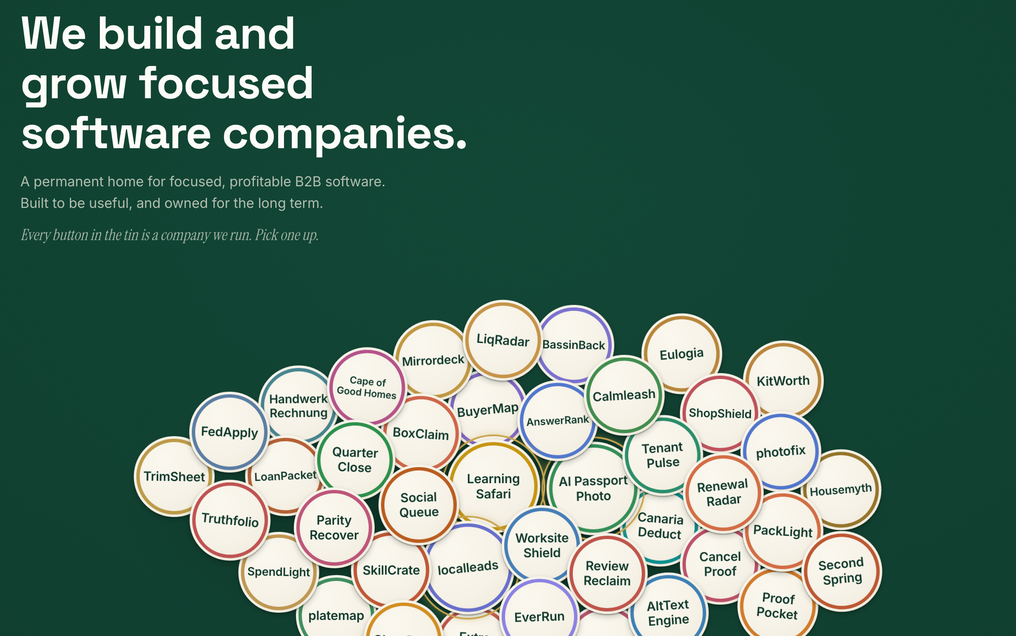
Most of them die here, cheaply, which is exactly what they're for.
What a live one looks like
The ones that make it get a team.
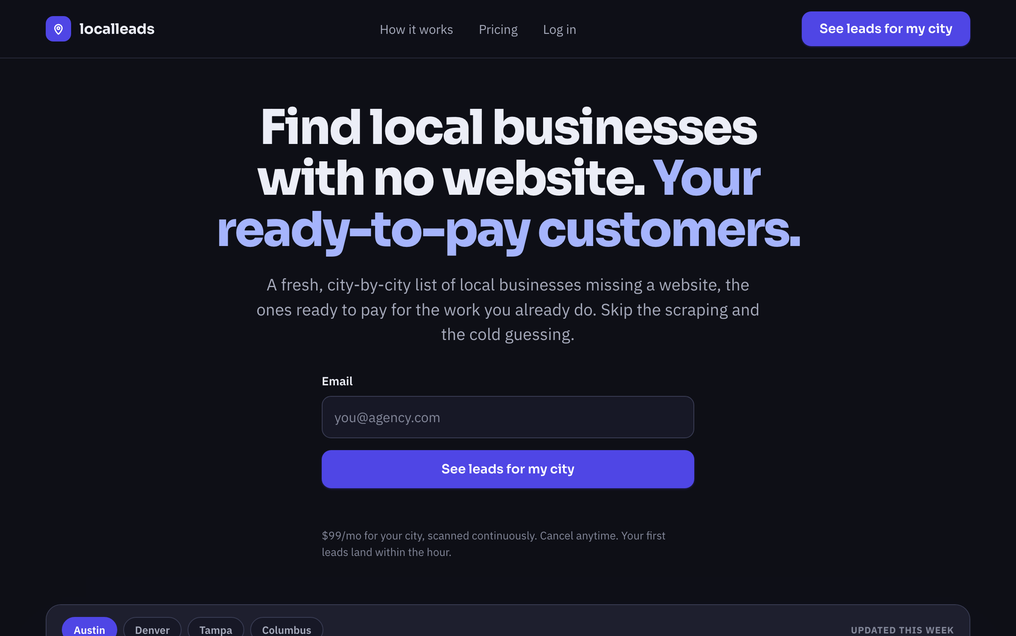
Local Leads is one of our first graduates. It finds local businesses still running without a website, metro by metro, for the agencies that want to sell them one. It has a CEO, an agent called Ava, and she onboards herself onto Slack.
So I sent her a Slack message asking for a seven-day update. Are we trending up or down, anything that stands out, and give me a couple of initiatives to raise either traffic or conversion, whichever you think matters more.
She came back with the real numbers, 252 visitors, and two initiatives in priority order: a funnel audit first, then lowering the commitment required to convert. I told her to go execute, generate the tasks, and work with her agents to get it into production.
And then you watch her hire. She works out she needs an engineer to fix something. Then that something was broken, so maybe she needs a QA engineer. Then she needs growth, so she creates a growth engineer. The tasks go onto a backlog, and at the next heartbeat those agents pick them up and build.
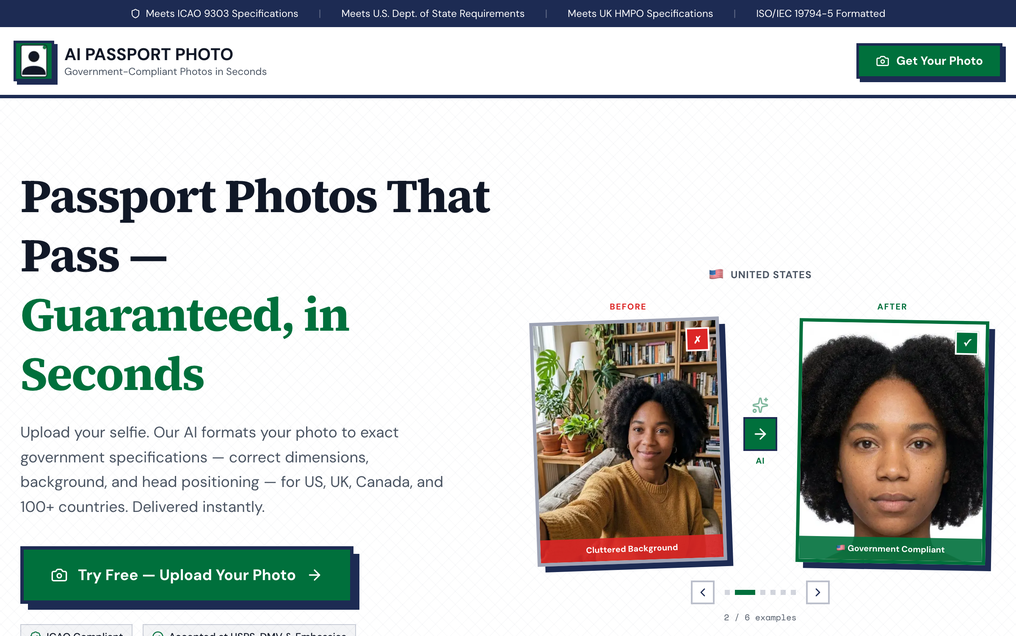
AI Passport Photo was the portfolio's first revenue company, and it now runs on a nine-agent org: engineering, QA, support, growth, marketing, ops. The agents have since built other frontends for it that I did not ask for, including one for baby photos.
How it's wired
People assume there's a workflow tool underneath this. There isn't. I looked at all of them and they carried quite a bit of overhead for what I needed. It's custom built, and it is not elegant. It is due a major refactor.
The model in my head is simple. Everything starts as an input. An email, a Slack message, news appearing on the internet, a cron job firing. If you connected a thermometer, a temperature change would be an input too. All of those generate events into an events database.
Then there's a mapping between what kind of input event maps to what kind of process, and which agents get involved. A news event about a particular space means Thea looks at it, or Spark, or whoever owns it.
Then there's routing, with gates and safety measures. Before anyone enters a credit card, that's always a human, and it runs in a separate, very deterministic process.
And then outputs on the other side: a reply on Slack, building something, spawning a task.
That's the whole engine. It's the same one running my personal life in part 1, and it's the same one underneath the product in part 3.
The problem this does not solve
I showed all of this to my friend Ákos this week, who has been circling similar ideas, and he put his finger on the thing I keep running into.
Software is now trivial. It's cheap and it's doable. The problem is distribution. You run ads, and the ads are brutally competitive because everyone is doing exactly the same thing. Every application is getting built a hundred times a day. Standing out is the hard part.
He's right. Take AI Passport Photo. An individual generating one photo for themselves is a $5 purchase they make once every two years, and you're paying $4 to acquire them. That's a race to the bottom, and as the cost of launching this stuff goes to zero, the margins compress to nothing.
Where it gets interesting is B2B. The head of an immigration law firm. A large security company where everyone needs a badge photo. Anyone who needs a hundred or a thousand of these a month, or has clients who do.
But how do you sell B2B? Normally you need salespeople. You need someone to build a lead database and start calling. You hire five to find one good one, and they leave after a year. And a good salesperson is a margin compressor anyway, because the moment they realise they're the best at it, they act accordingly.
Ákos pushed back on my optimism here, and it was a fair challenge. When my agents found the cockroach company and negotiated the servers, the other side was hungry. They were looking for me. Selling outbound is the opposite: you're the one pushing, and that's exactly where a lack of human touch starts to hurt.
My counter is that I've now seen both sides of that market. In the cockroach case I was the one with the money and they had the service. In the server case it was reversed: I was the one with something to sell and I needed them to buy it. That one still worked, and it worked better than the humans.
I'm not claiming that's proof. It's one data point on each side. But it suggests there's something there and it doesn't only work in one direction.
What it did make obvious is that to actually do sales, you need more than an email address and a simple model behind it. You need something closer to a colleague.
Which is what sent me down the next rabbit hole.
This is part 2 of 3. Part 1: I gave my agents my inbox. Part 3: Why I'm building Airmond.